
How Does It Work?
Acupuncture regulates
circulation, metaboloism, and the healing potential of the body
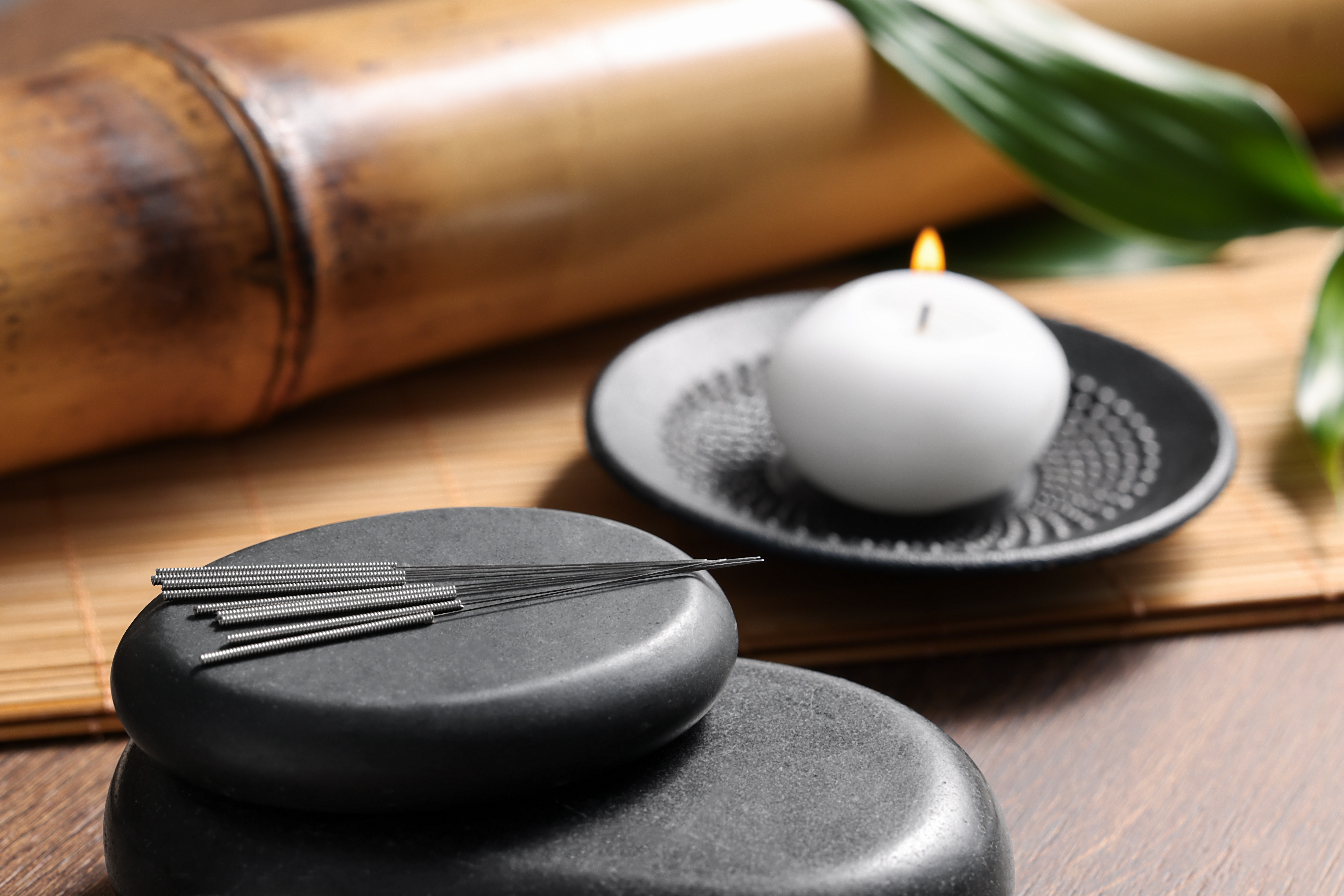
through the use of very fine needles
(smaller than a cat's whisker)
to stimulate the nervous system
in very precise ways.
Studies have shown how acupuncture regulates brain chemistry and pain levels. Case studies, collected over millenia, demonstrate the fine tuned knowledge of the pathways of the body, often following nerve pathways and muscle chains.
We often place the responsibility of health in the hands of the doctors and insurance companies. There is a divide between our day to day behaviors and the medical treatment of disease. There are times when western medicine is exactly what is needed, and there are times when it isn’t able to adequately address what is wrong.

Three Phases to Treatment
Phase 1
Clear out the gunk that is getting in your body's way of returning to equilibrium
Phase 2
Open circulation pathways throughout the body & further clear out places of stagnation
Phase 3
Nourish your system to strengthen your body's ability to maintain balance on its own
Treatment Flow
Your first session is an Initial Intake with Health History & first treatment.
During this session, we will go into depth around why you are coming in for acupuncture.
We will take some time to understand the history and context of your environment and how it may impact what you are experiencing in your life and in your body that is throwing things further out of balance.
We build a treatment plan based on
your goals and priorities
the patterns of disharmony that emerge through the intake
diagnostic observations of
pulse qualities, tongue patterns, color of the face, sound of the voice
Why Isn't It Better Yet?
Sometimes the deeper underlying patterns are important to understand before the symptoms you are experiencing can get better. Sometimes, nothing will help what you are feeling until these underlying patterns are addressed. Often our culture focuses on the symptoms themselves instead of what is causing the symptoms.
When things are “off” or “stuck”, when you are exhausted, or in pain, it takes a huge amount of extra effort to maintain healthy patterns of self-care with exercise, food choices, or daily meditation practices.
Some of the approaches you have tried may help aspects on a physical or neurological level while others help on a mental emotional level, but many modalities miss integrating the two together.
Three Truths to Healing From Within
In my experience, I have found three truths that are foundational in accessing true healing from within.
1. True healing becomes possible when the deepest parts of yourself can be witnessed and known. Safe space and time to be yourself in both your health and in your utter messy brokenness are essential in the journey to health.
2. The physical body inherently knows how to heal itself. Where there are blocks and stagnation on physical, mental, or emotional levels, this self-healing process is disrupted.
3. Sometimes, you need help getting back on the path to health. When you have the right kind of support, making healthy choices in your life is easy.


You already know about self care.
You are getting exercise when you are able to, you may have joined a yoga class, you may even have a meditation practice, and you try to eat well.
If your body would let you, you'd love to move more.
You may have reached out for help from other directions as well. Each of these may have helped some, but not enough.
Stress still lingers, symptoms aren’t resolved yet, and the tendency to get stuck is still present.

Frequently Asked Questions
Here are some of the most commonly asked questions that I get regularly.
Please reach out if you have more questions!
Does it hurt? I'm scared of needles!
An acupuncture needle is smaller than a cat's whisker. You can fit 40 in the tip of a hypodermic needle - the kind they use for shots or drawing blood. It's a very different experience than you may imagine.
Sensation can vary hugely from person to person and point to point. Sometimes you don't feel anything, sometimes there can be a slight pinch or biting sensation. Other times there might be a deeper ache - this usually means we're moving some stuck energy which is really good.
If a needle ever feels super painful - we pull it right away.
And for those that the needles get in the way of being able to relax, here's the secret - you don't actually need the needles to get energy moving in the body to restore balance. Check out options for acupressure, shiatsu, and energy work.
What does treatment look like?
Your first treatment includes a 45 minute health history and intake before getting you on the table. This gives a chance to gather more information to understand the big picture in order to treat from a holistic perspective.
An initial series of 3-5 weekly treatments is recommended in order to build a foundation and assist your body in shifting long standing patterns.
Depending on how you are feeling as we continue building with treatments, we will begin to space them out to every 2 weeks or once a month to move into a more maintenance level of care.
For a whole bunch more info, check out How Does It Work?
How many times and how often do I come in?
Everyone responds differently to treatment. You are your own unique case and we won’t know what treatment looks like until we get started. How long have things been off? It takes time to unravel and rebuild when the body has been overcompensating for places of weaknesses. Sometimes treatments can have a deeply profound effect right away, sometimes results can be more subtle.
In the early stages of treatment, I often recommend coming in 1-2 times a week for the first three to five treatments. This allows us to build quickly on the previous treatment.
Most often, I see people respond the best with a series of treatments until symptoms stabilize, usually within 5-10 treatments. As you start feeling better, we may schedule every other week or move to a more spaced out maintenance schedule of monthly or seasonal treatments.
What should I wear for a treatment?
Loose comfortable clothing is recommended for a treatment so that we can easily move layers to the side to reach points on the legs, elbows, or abdomen. If we need to get to points that are harder to get to around clothing, we'll pull out a drape and have you remove layers that are in the way.
How should I prepare for a treatment?
It is good to be hydrated and not hungry before a treatment. This can help reduce with spaciness as you get up off the table following your treatment.
The main things I notice that interfere with treatments are:
Coffee
Alcohol and other substances
Heavy Greasy Meals
Please refrain from these before your appointment.
Otherwise, wear loose comfortable clothing and come as you are.
What should I expect following a treatment?
Treatments are often deeply relaxing.
And it can vary hugely from person to person and treatment to treatment.
Sometimes you get off the table and you are super spacy or lightheaded, kind of like what can happen following a massage. Drinking water and moving around is usually helpful for arriving back in this time plane afterwards.
You may need rest, especially if you have been pushing hard for a while.
Sometimes your body wants movement after a treatment, it may have been hard to stay still while on the table. This means we are moving some big stuff and physical movement is needed to help continue the treatment afterwards. Honor this. Listen to what your body is asking for, and take care to not overdo it.
Occasionally, old aches and pains, or discomfort can flare up after a treatment. This is a normal response that is a sign of old gunk clearing out. This usually clears on its own following sleep. Sleep is a wonderful reset button.
If discomfort persists, we encourage you to reach out for more follow up if needed.
Can you help me with...?
Acupuncture is a very old medicine that predates modern medicine. It is a health care system of its own and through understanding patterns from a different perspective, many health conditions can be addressed. In the 20+ years that I have been practicing and studying this medicine, I have worked with:
general well-being: general health, insomnia, fatigue, asthma, allergies, hypertension, immune system, weight management, edema, atrial fibrilation, congestive heart failure, prolapse, headaches
emotional well-being: depression, anxiety, grief, stress, addiction, eating disorders, trauma recovery, post-traumatic stress disorder
women’s health: PMS, menstrual health, fertility, prenatal and postnatal care, labor induction, morning sickness, menopausal symptoms, hot flashes, night sweats
physical pain: general aches and pains, back pain, sciatica, migraines, arthritis, hip, shoulder, knee, elbows, ankles, wrists, sports injuries, surgery and anesthesia prep and recovery, muscle tension, trigger finger, numbness, fractures
digestive health: indigestion, heartburn, IBS, crohn’s, constipation, diarrhea
mental well-being: mental clarity, memory loss, head injury, foggy-brain
chronic illness: Lyme Disease, diabetes, fibromyalgia, migraines, chronic fatigue, Eppstein-Barr, effects of chemotherapy, stroke rehabilitation
and more…
What is Community Acupuncture?
Community Acupuncture aims to increase the accessibility of care for members of the community through a sustainable model that
~ increases treatment availability in the schedule;
~ is affordable for more individuals in the community; and
~ is supportive and sustainable for the practice and practitioner
Community Acupuncture Life Cycle: Regular, frequent treatment works best, pay what you can afford, get here often enough, get better and stay better, tell your friends and family, support your local acupuncturist and the wider community.
~ POCA; People’s Organization of Community Acupuncture
In order to increase accessibility, Community Acupuncture at Deep Roots Acupuncture is sliding scale, $25-$60 (additional donations welcome) with the general guideline that if you are earning more than $100,000 annually you opt for the full amount and if you earn less than $25,000 in annually, to please opt for the $25 option. And, the reality is, only you know the full picture of your finances and so regardless of your situation, you get to choose the number that works best for you in order to receive the care level that will benefit you best.
Community Acupuncture Hours
Tuesdays 11:30-1:00
2nd Saturdays (occ 1st) 10:00-noon
4th Thursdays 4:30 - 7:00
And check out more information about the community acupuncture set up and vibes here!

Get In Touch
Please reach out with questions. I'd love to hear from you!
Blessings, Lucy
Monday 1:00 - 5:30
Tuesday 10:00 - 1:30
Wednesday 10:00 - 5:30
Thursday 10:00 - 7:00
Tuesdays 11:30 - 1:30
2nd Saturdays 10:00 - noon (1st Saturday alternate schedule)
4th Thursdays 4:30 - 6:30
Subscribe to Living In Sync with the Seasons
Receive self care tidbits and resources to invite more health and vibrancy into your life. Follow the transitions through the seasons and how to stay in tune through those changes. Stay up to date on events and offerings at Deep Roots with our newsletters.